
Fire from Above
Arizona, USA
“Send thy angry storm, dark with death, if it is thy wish, and with lashes of lightning startle the sky from end to end. But call back, my lord, call back this pervading silent heat, still and stubborn as the evening of doomed creation. If thou trackest the world with thy steps, leave on it the print of those steps — the world with its wounds will be healed, and the gloom of the sky will be chased away by the dance of thy lightning, and even the shroud will be lit up with beauty. But this slow suffocation in vapour and smoke, this living death, I cannot bear.”
— Rabindranath Tagore, Gitanjali, Poem 40
Years ago, while driving to Phoenix, AZ, I was struck with awe when the skies suddenly erupted in colors of smoke and blood. It was a terrifying yet magnificent act of nature to witness.
Whenever people talk about division, I remember that celestial battle above — a sky lit in fury, as if the ancient Vedic Rudra had set the doors of heaven on fire. Zeus with his Thunderbolt, Thor with his hammer, Taranis with spinning wheel, Manjushri with flaming sword, Tlaloc, the Hopi Kachina Spirits, Lei Gong and Raijin rushed out of the history books onto the soil to remind me that day that Nature is out of our control, above and beyond our understanding.
I stopped the car and watched and wondered. The same storm above Arizona was possibly rolling over the red plateaus of Tibet, drenching the ghats of Bengal, and dancing over the fire temples of Azerbaijan. Humanity creates labels to divide, Nature reminds us that we are all just witnesses to the Divine’s majesty.
The terrifying memory came back to me today, the first Shravan Somwar Vrat in 2026, a day dedicated to Lord Shiva in the sacred monsoon month of Shravan — a time to honor my Bengali heritage, the mysteries of Vedic culture and Rabindranath Tagore. This is time to honor the blessing of rain, water for life and hope.
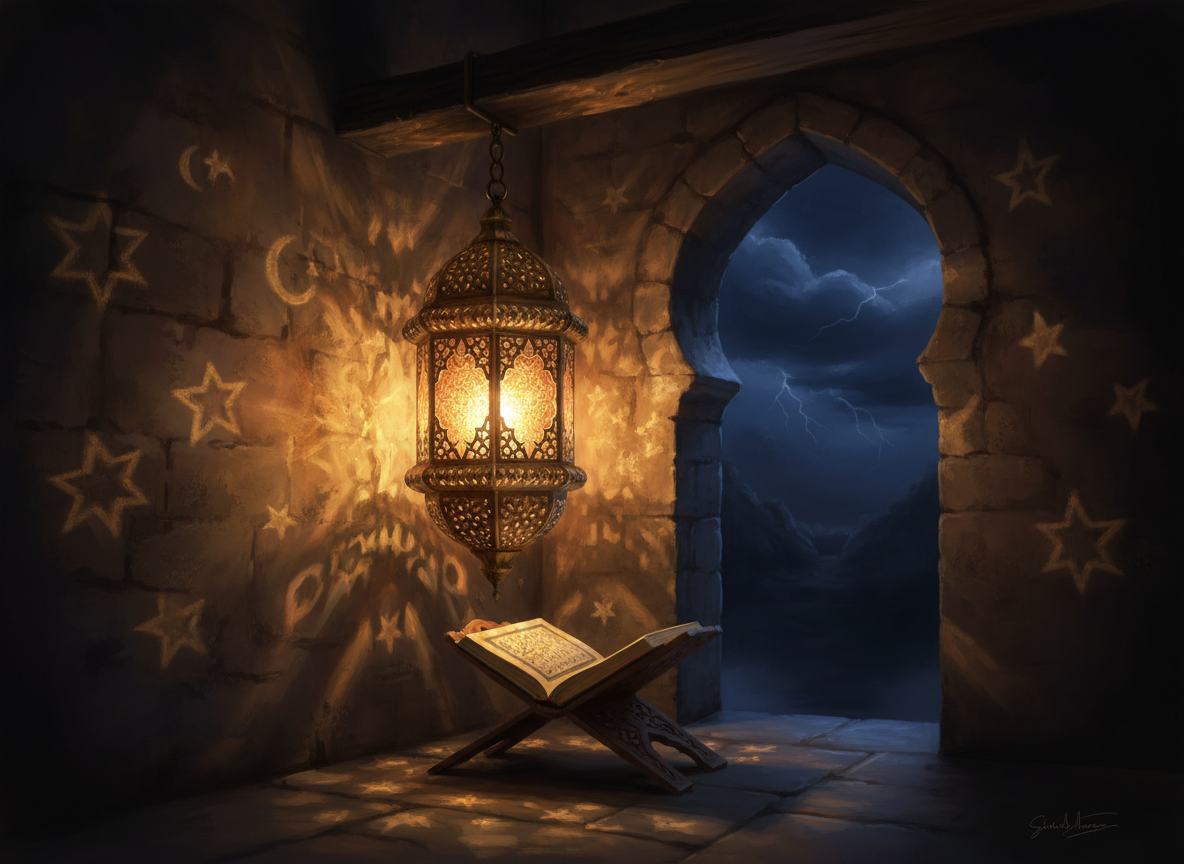
When the angry sky and ancient scriptures speak together, I find myself drawn not to the differences between traditions but to their startling convergence — the storm as a universal language of the Divine. It is this same light that the Qur’an calls Ayat al-Nur — ‘Allah is the Light of the heavens and the earth’ (Surah An-Nur 24:35) — a Light above all Lights.
It is in Shravan that all of this comes alive for me. Rain and thunder return like a liturgy. The sky speaks. And in that speaking, I hear every tradition at once — one storm, one sky, one unbroken refrain reaching upward from every corner of the earth.



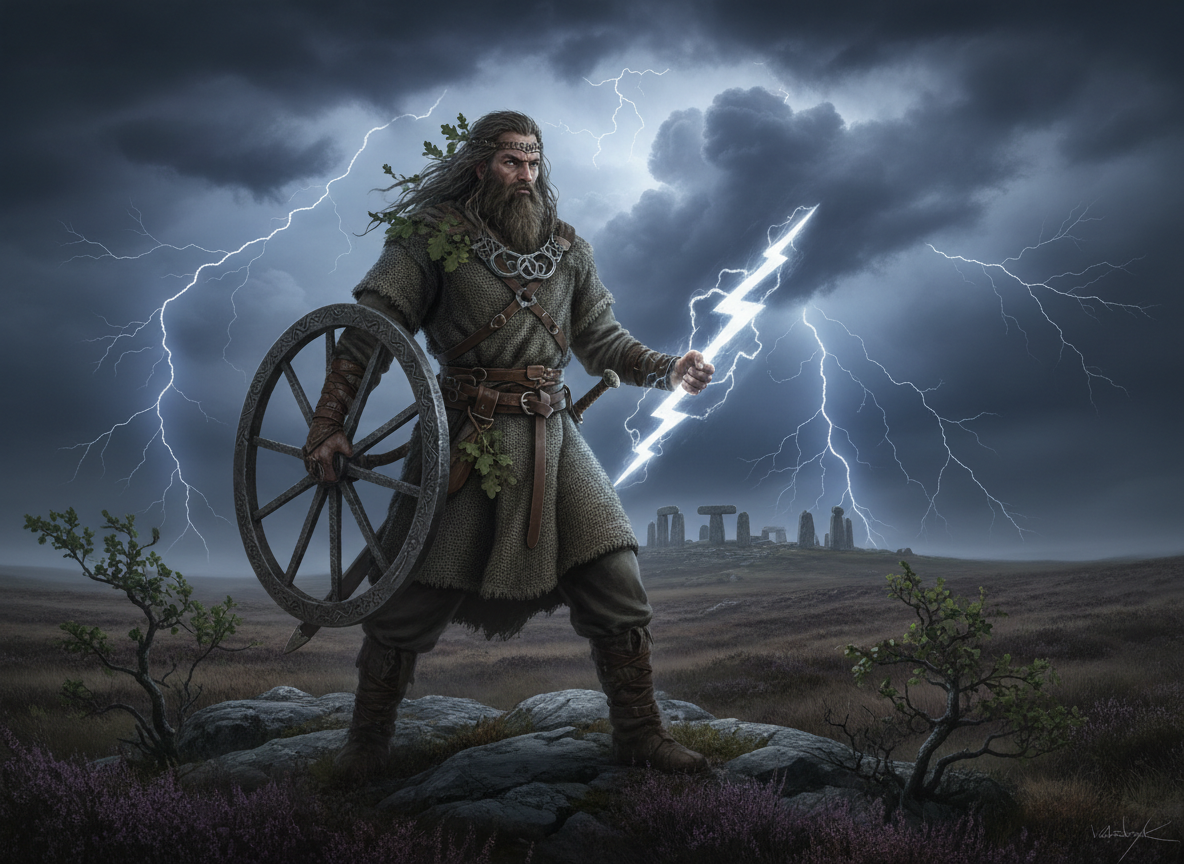


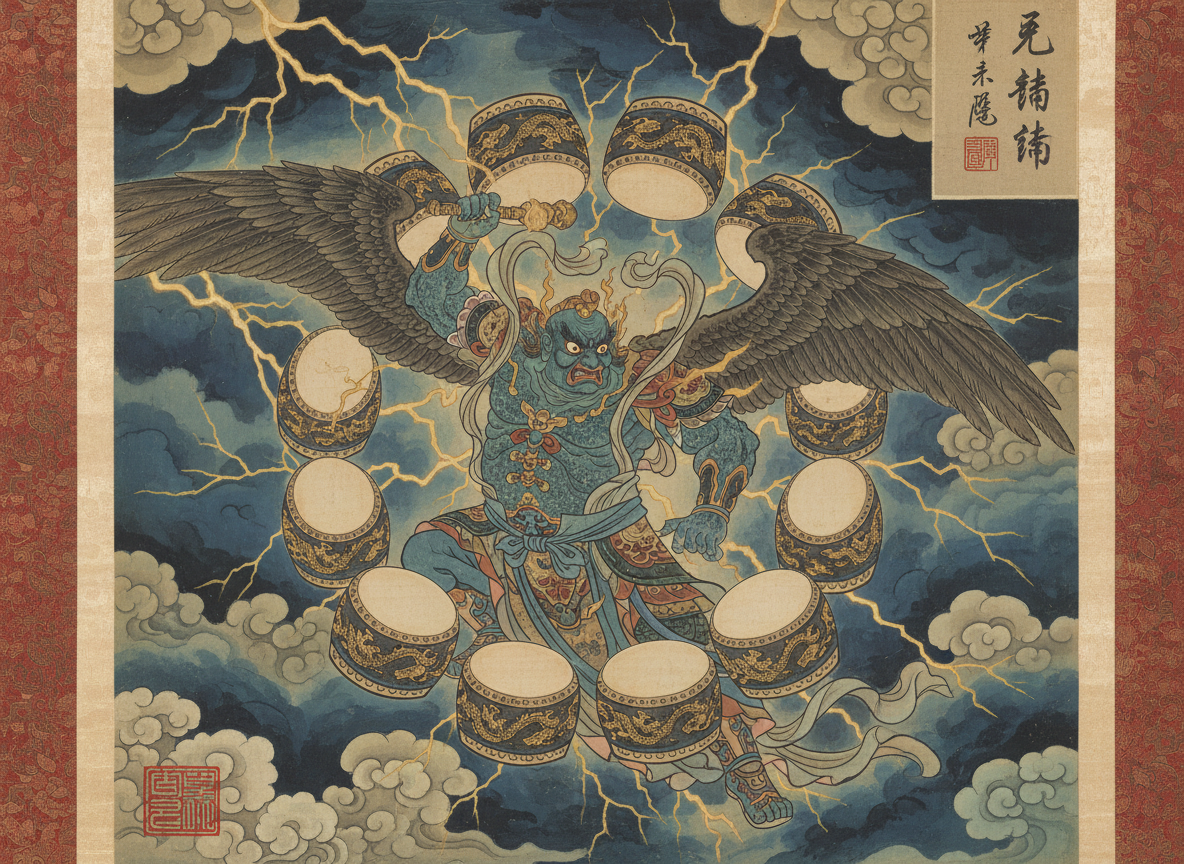

In the Sikh tradition, the jyot — the divine inner light of the Guru — burns undimmed through every trial. Just as the dark monsoon clouds cannot dim the radiance of the Golden Temple reflected in the sacred sarovar, fierce storms cannot extinguish the inner peace provided by Waheguru. The Guru Granth Sahib teaches that this divine light is not bestowed or withdrawn by outer circumstance — it is the steady grace of the Eternal, present in the thunder as much as in the clearing that follows. In the Taoist tradition, Lei Gong, the Duke of Thunder, and Dian Mu, the Mother of Lightning, give voice to the same balance — their storms not random fury but the Tao’s natural order moving through the world. And in the Qur’an, Surah Ar-Ra’d 13:13 reminds us: ‘The thunder glorifies His praises, as do the angels in awe of Him.’ Rain itself is among His signs, as Surah An-Nur 24:43 declares: ‘He sends down from the sky mountains of clouds, then He strikes with them whom He wills, and averts it from whom He wills.’
Standing under that Arizona sky years ago, I did not know I was receiving a teaching. All these voices — from the Vedas to the Qur’an, from the Norse fjords to the Hopi mesas, from the Himalayan plateau to the red earth of Australia — have whispered the same refrain to humanity: one world, one thought, one unbroken return to the truth that leads us back to each other, and back to One.
Whether it is the Flaming Sword of Manjushri rising from the red mountains of the East, or the Zoroastrian eternal flame burning undimmed within the storm, fire and water are never opposites — they are twin expressions of the same covenant. ‘May Ahura Mazda grant us health and healing through waters and through fire,’ the Avestan texts implore (Yasna 68.10) — storm and flame not in conflict, but in covenant.


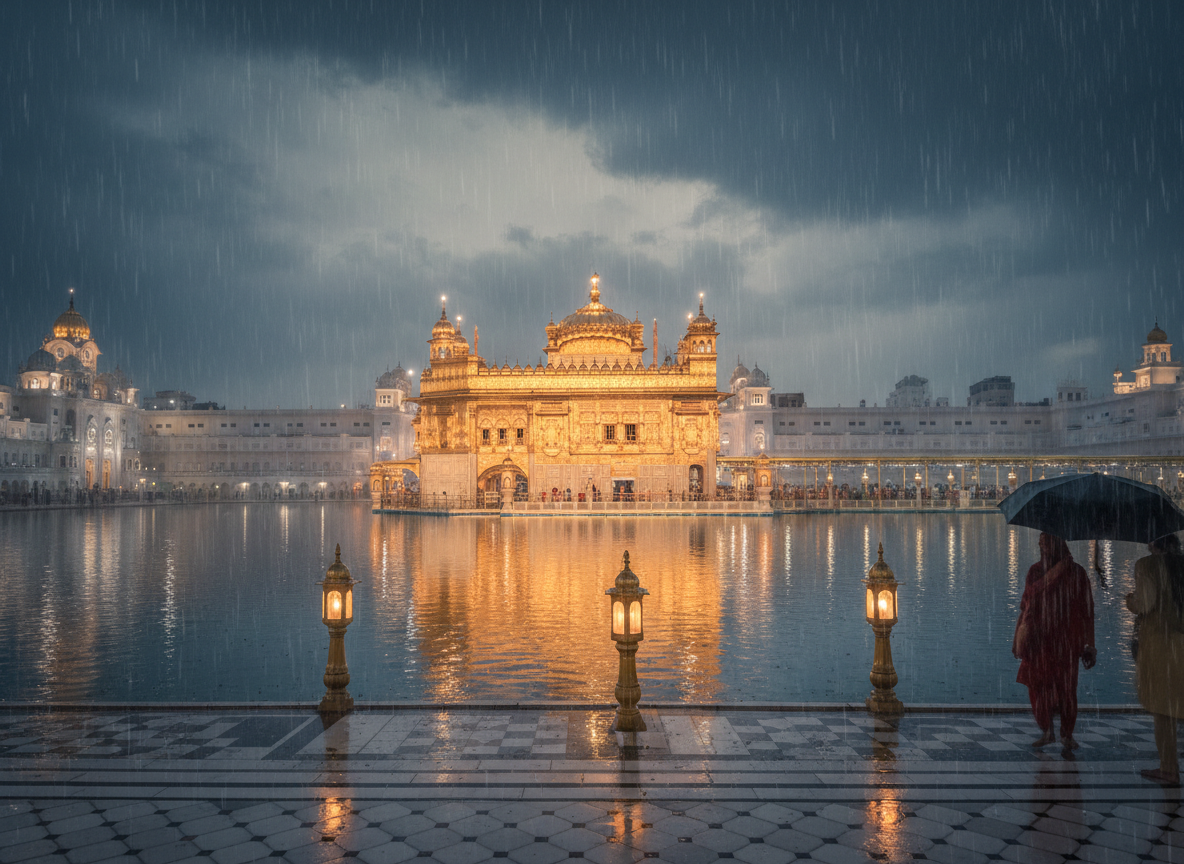
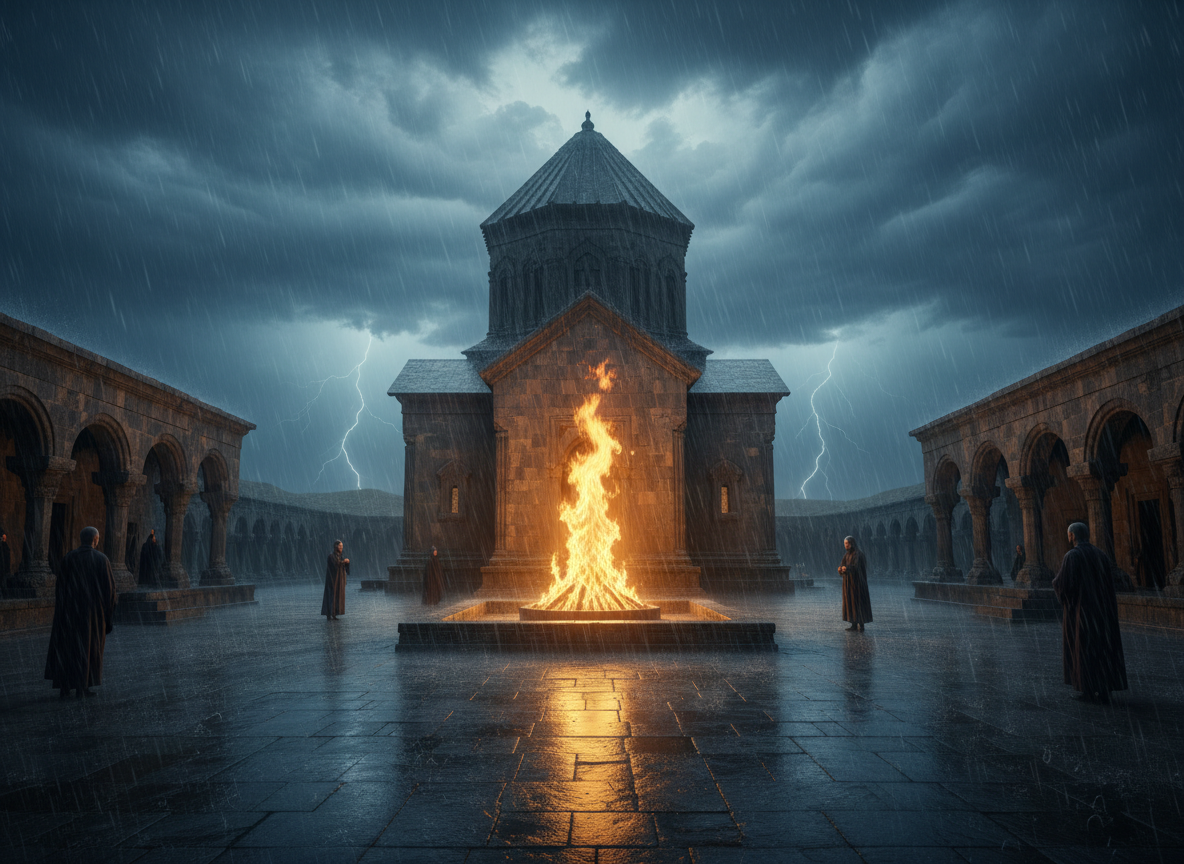
Enjoy the blessings of rain. Enjoy Shravan and listen to Shravana Gaganay Ghor Ghana Ghata.
My favorite Rabindrasangeet is Shravana Gaganay Ghor Ghana Ghata, Tagore’s song of a special monsoon night, where a Bengali maiden is standing at the edge of a dark forest, lamp flickering in the rain, her heart pulling her toward her beloved and yet her feet stuck— fear and longing battling within her, she has to chose whether to stay or travel into the wild, unknown.
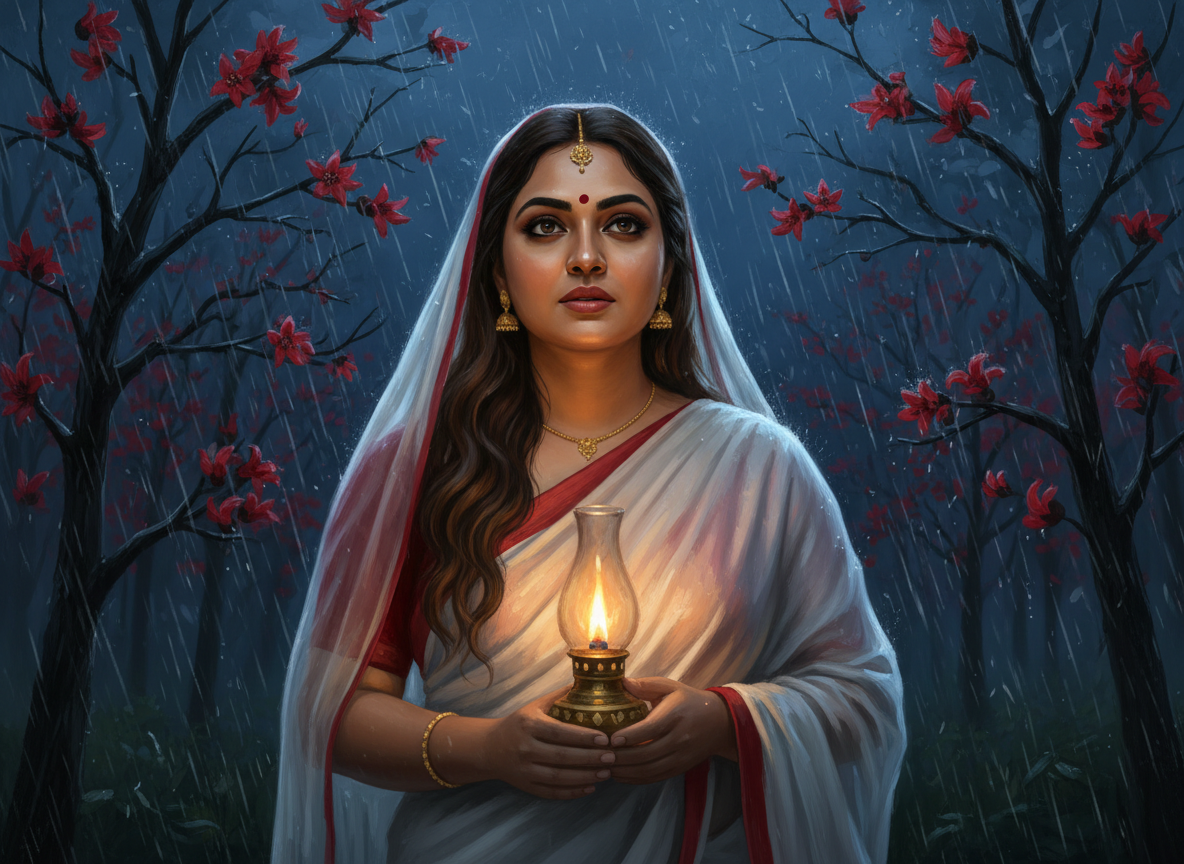
Her story reminds me of the North African legend of a beautiful girl of the Amazigh people of North Africa. The Amazigh god of rain, Anzar, saw and fell in love with her. He transformed himself into a great eagle and swept down toward her — and she fled. In his grief and fury, Anzar withheld rain from the earth. The fields cracked. When she understood what happened, she consented to marry him. Her fear of the unknown had not vanished, but her love for her people made her strong and she trusted the Divine to return the rain. She became Anzar’s bride and the rains returned. To this day, when rain falls over North Africa and a rainbow arcs across the sky, it is called Tislit n Unzar — Anzar’s Wife. Each autumn, in villages across the Amazigh world, women carry a great doll dressed as the fiancée alongside a ladle called Taghonja, singing for rain, reenacting that ancient covenant between courage and surrender, between the storm and the one who chose to meet it. Taghonja is the little bride of rain, collective hope resurrected.
To me, the Bengali maiden in Tagore’s monsoon song and the Amazigh girl are the same soul — scared, trembling, yet brave enough to trust the Divine Light above all Lights.
He who sends the storm is also the One who parts the sky. ‘It is He who shows you the lightning, inspiring fear and hope, and generates the heavy clouds. The thunder glorifies His praises, as do the angels in awe of Him. He sends thunderbolts, striking with them whoever He wills.’ (Surah Ar-Ra’d 13:12–13). Every storm, in every tradition, has been humanity’s way of looking up and knowing: we are not alone beneath this sky. The maiden walks forward. The bride consents. The Ark is boarded. The light is not extinguished. اللَّهُ نُورُ السَّمَاوَاتِ وَالْأَرْضِ — Allah is the Light of the heavens and the earth.


Leave a Reply